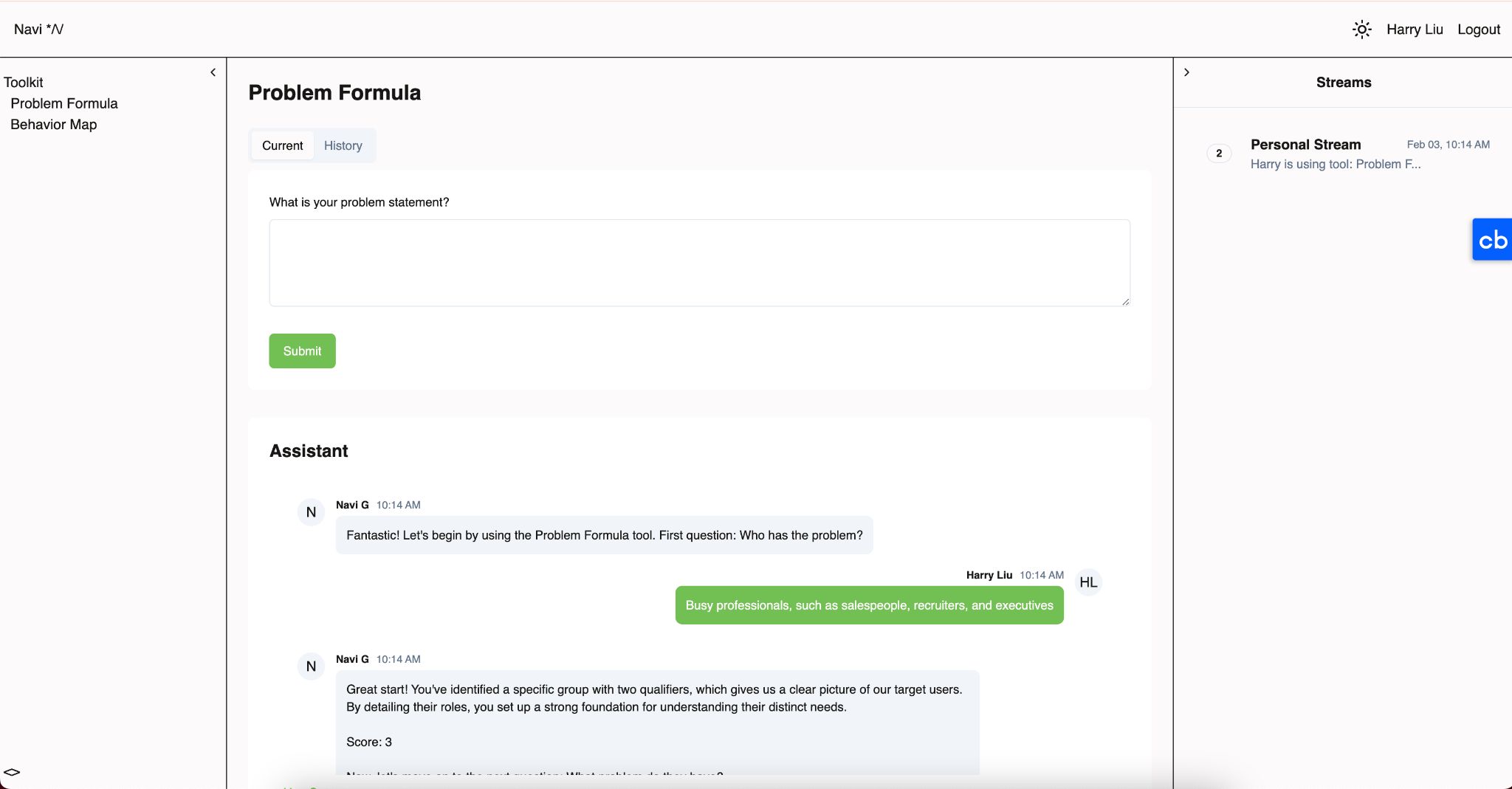
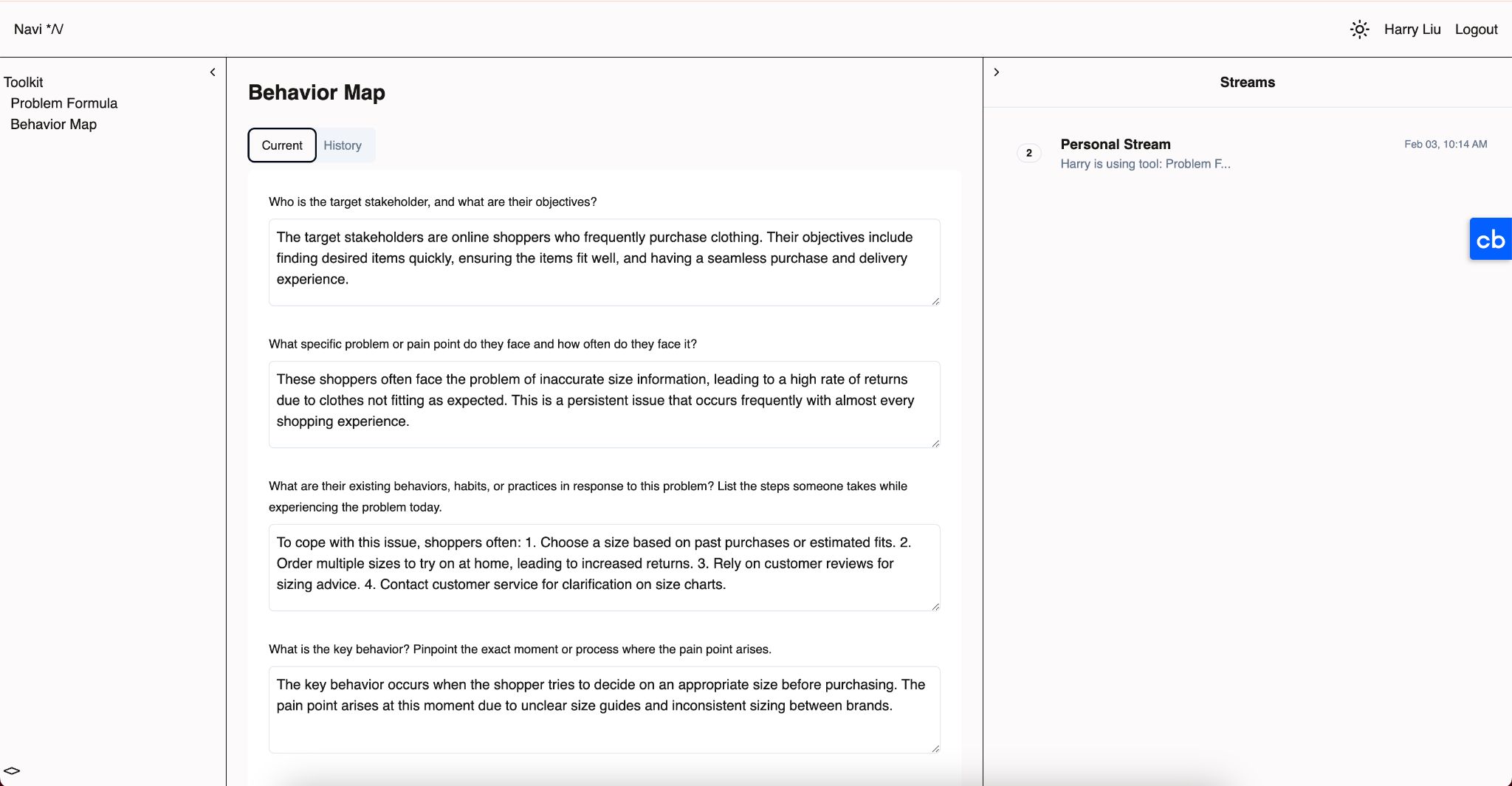
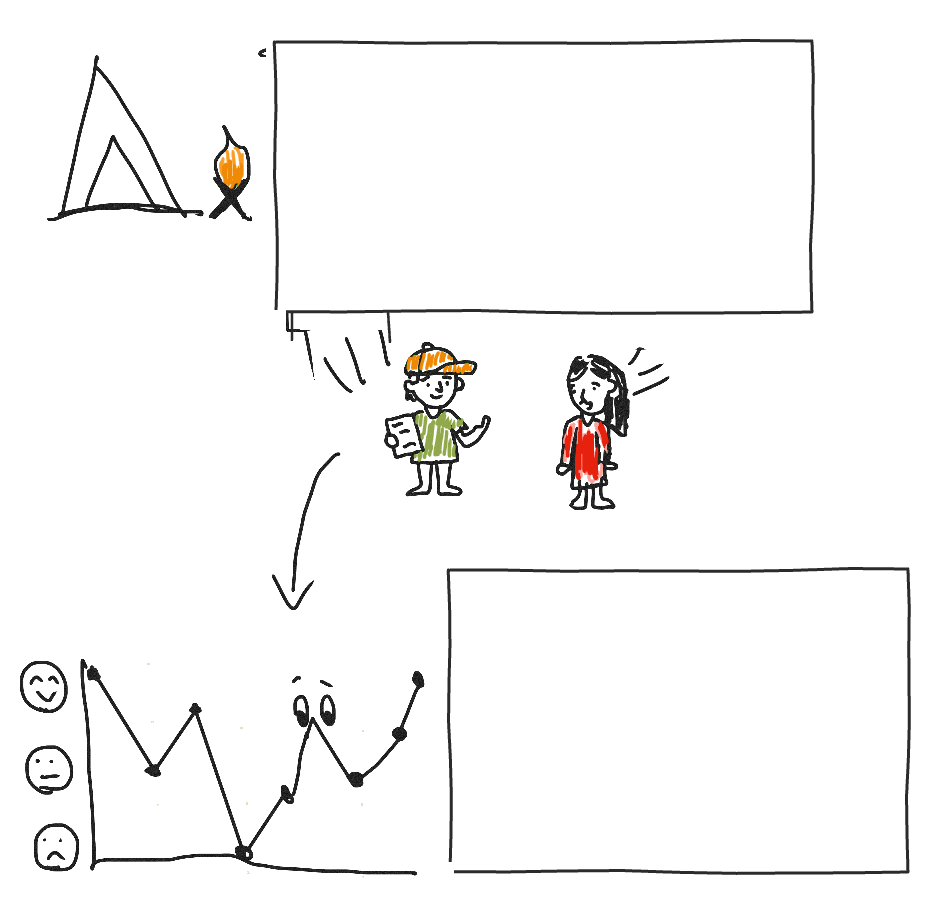
At the bootcamp: Problem Formula on the big screen, the behaviour map re-drawn by hand, and every interview typed up in Linear
Research Synthesis Hero · Product Management · Estimated 7 min read
Mona Saeed (Data Scientist),
Harry Liu (SWE)
AI Product Manager · UX
AI/ML: Gemini 2.5 · RAS · Hierarchical clustering
App Deployment: Next.js · FastAPI · Supabase Vector · Cloud Run
ProductForce fuels innovation economy and collaboration by giving every team member the superpower to turn a pile of raw interviews into a prioritized, evidence-backed list of actionable items. What used to take hours for complex pattern recognition across a large quantity of interviews now takes minutes, with human control at every step of the decision-making process.
Navi is an early-stage startup that builds products that help people and organizations earn skills to unearth, articulate, and solve problems. Their current offering includes 2 tools: Problem Formula, an AI-assisted flow that walks users step by step through documenting and refining a problem statement, and Behavioral Map, an iterative pass at identifying key behaviors and pain points.
User interviews are the fastest and cheapest way to start and validate a process. ProductForce sits upstream of everything Navi already sells, providing a centralized repository for the team to collect interview insights that feed directly into Problem Formula and the value transaction map.
Product managers and UXRs spend 12–15 hours synthesizing every five interviews. That manual burden creates insight debt: patterns lost to fatigue, or buried in static documents nobody reopens. Roadmaps end up decoupled from the raw user evidence that should support them.
of research time lost to clerical tagging
of critical insights missed due to fatigue
We identified Life and Health Sciences as the initial target market, which is the next industry Navi plans to move into. However, we discovered that many internal decisions for R&D innovation bypass interviews and are dependent on organizational structures.
We also started this pursuit to create a "teleprompter app" to assist with user interviews. After running over twenty live interviews across the product and healthcare ecosystem, we realized we needed to adapt our target market for this project. We narrowed down who the product serves and which key behavior of the interview process to own.
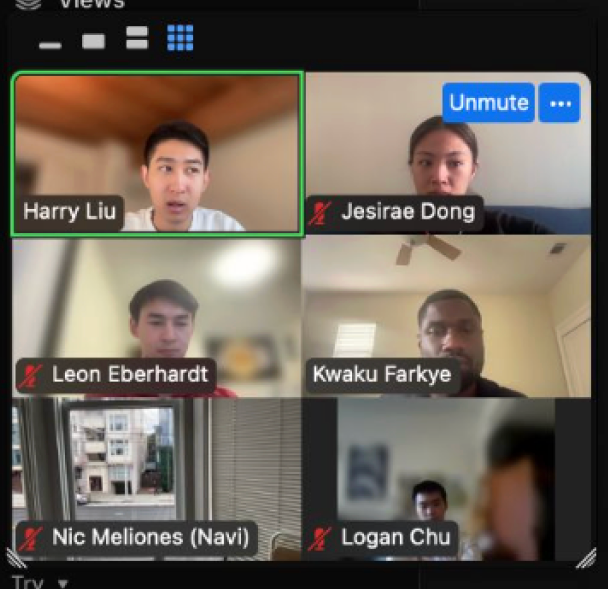
“Motivated by continuous learning to foster collaboration.”

At the end of Sprint 1, my team and I brainstormed and sorted features by their impact on Jordan's job and our team's technical feasibility in Sprint 2. We validated these features with previous interviewees who match the target persona and decided to focus on team collaboration, HITL control of synthesis results, and insight prioritization.
Summaries were untrustworthy without clear labels: nobody could tell which sentence came from a user and which came from the model. We rebuilt the analysis layer as retrieval-augmented synthesis (RAS) so that every claim is forced to cite the transcript span it came from, and any claim that cannot cite is dropped before it renders. Every piece of text inside ProductForce is editable for human control.
Pattern discovery needs scale to tune, and specificity to trust. We calibrated clustering heuristics on high-volume Amazon review data, then tested on specialised ServiceNow solutions-engineer transcripts to:
Reasons across 50+ interviews at once, finding patterns that span sessions instead of summarizing them one at a time.
Unsupervised NLU groups repeated pain points into tiered themes, cutting manual tagging burden by ~90%.
Zero-hallucination policy: no summary is viewable without its source quote attached and highlighted.
The 5-step interaction flow (prototyped with Vercel V0)
Solutions engineers rebuild the same demo environment for every customer call, losing prep time to setup rather than tailoring.
Source verified“Honestly the demo itself is fine. It's that I rebuild the whole environment from scratch every single time — that's the part eating my week.”
a. The dashboard below shows project cards, upload entry point, and interview table. Interviews are sorted by projects and time conducted.
b. The project prioritization page: every verified problem area across the project's interviews, filterable by persona, priority, and date. Clicking a row opens a detail panel with supporting excerpts and source transcripts.
Every claim about the model was tied to a KPI with a baseline. Clustering quality improved from a Sprint 1 silhouette score of 0.72.
| Metric | Definition | Result |
|---|---|---|
| Silhouette score | Mathematical distinctness of thematic clusters | 0.78 |
| Recall rate | Nuanced patterns identified vs. human coding | +50% signal |
| Grounding rate | Insights directly verifiable by transcript quotes | 100% |
| API latency | End-to-end processing of a 60-minute session | ~128 sec |
Impact on analysis velocity. In a pilot with ServiceNow solutions engineers, synthesis time per five interviews collapsed by 88%, reclaiming strategic time.
A local scrubbing layer strips customer names and emails before data reaches the LLM API. In enterprise B2B, security is a sales enabler, not a checkbox.
The UI forces quote-back verification: a summary cannot be viewed without its original transcript evidence attached.
Hierarchical clustering protects quiet voices so niche feedback isn't swallowed by majority sentiment.
Output quality still depends on transcript quality; noisy audio files carry a low-fidelity warning rather than a silent degradation.
Built on Next.js, FastAPI, and a Supabase vector database, deployed to Google Cloud Run so research spikes scale serverlessly without idle overhead. At roughly fifteen cents per synthesis cycle, the unit economics support a seat-based SaaS model aimed at mid-market and enterprise product ops. Estimated adoption: 850k product teams x $1.2k/yr = $1.02B TAM.
processing cost per synthesis cycle
product teams in the beachhead segment
Native Zendesk and Salesforce sync
AI video highlight reels
Cross-language synthesis
Predictive churn detection
Not to do it. The moment the model made the final call, trust collapsed.
PII scrubbing was the single most requested capability in enterprise conversations, ahead of any analysis improvement.
Pattern-discovery sensitivity can't be tuned on your own small corpus; borrowing a massive public dataset made the specialised one usable.
Our pivot from developing a tool for Health Sciences to broadening our scope to universal teams changed Navi founders' perspectives on leveraging interviews as their strong suit for innovation.
Thanks for reading :)