Plug-in Design · 6 Weeks · Estimated 7 min read
6 Weeks
Product Strategist, User Researcher
Ningyu Fan, Michael Agyeman-Prempeh
Figma, Respondent
Gradually is a browser-based wellness tool designed to support students and recent graduates navigating the uncertainty and emotional weight of entering the workforce. It combines affirmation-based nudges, personalized goal recommendations, and visual progress tracking to help users build confidence, regulate stress, and celebrate small wins along the way.
Welcome to the journey of growth with Gradually, where every small win is a habitual transformation for long-term wins!
By analysing 3 macro trends from Frog Design's 2025 Futurescape Report — Unleashing Zero UI, Policy of Prevention, and The Mind-Body Program — my team focused our mutual domain of interests on Speculative Health. We discovered a transformative opportunity to revolutionize preventive healthcare by making it:
We then brainstormed the groups of users that might benefit the most from a smart health solution — and identified an interesting transitioning phase where many young adults finishing academia and entering the workforce experience stress, burnout, and a lack of emotional support. Despite numerous productivity and job-search platforms, few tools acknowledge the emotional weight of this phase. Our team asked:
"How might we envision and design integrative health solutions that support young adults as they enter the early workforce, promoting long-term resilience?"
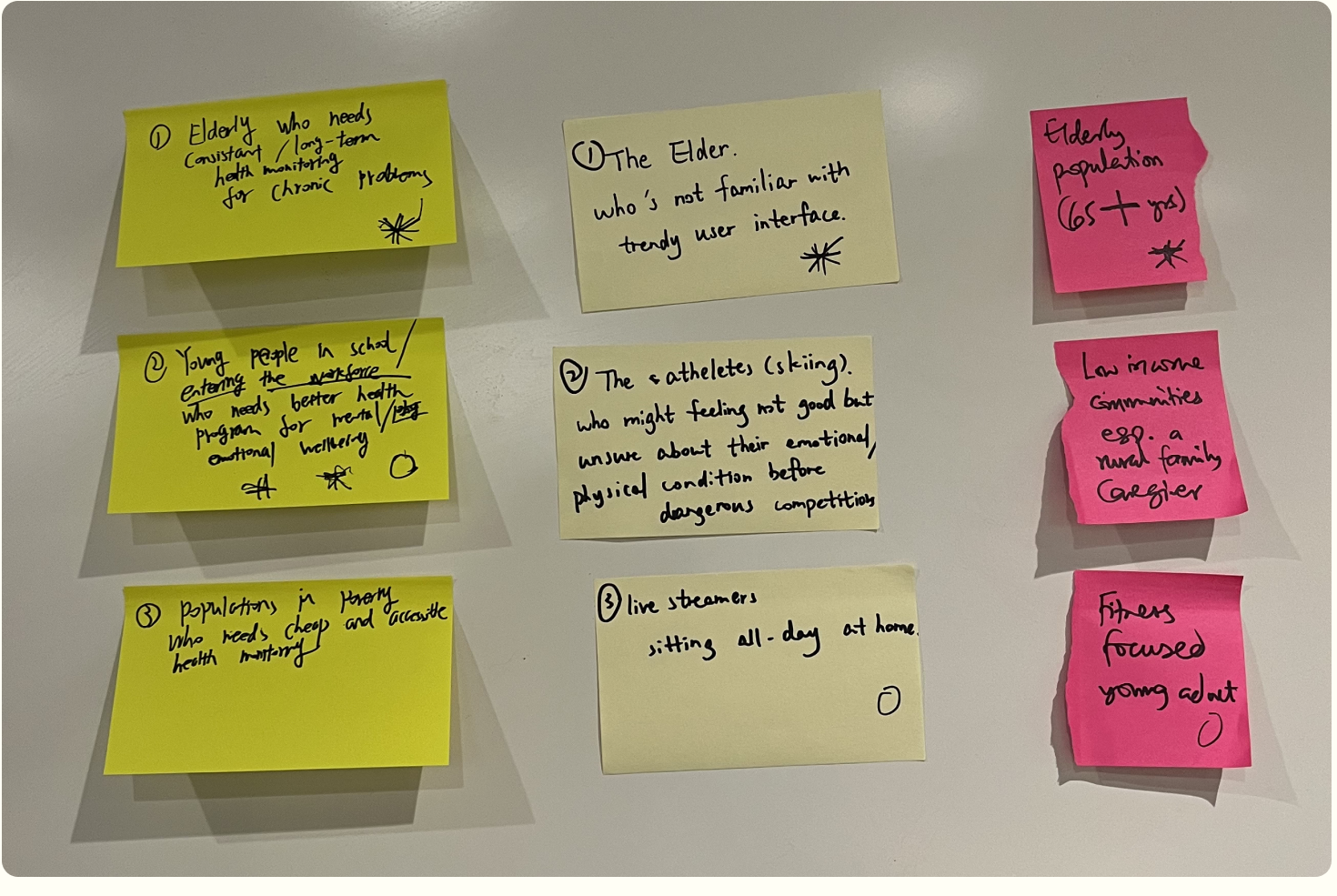
We went into a diverge + converge phase to define "promoting long-term resilience" in our initial HMW by really thinking through the need, stakeholder, and outcome. We first collected secondary resources and interviewed 6 peers for early-stage insights:
I don't feel 'bad enough' for traditional therapy, but existing mental health apps feel generic. I need preventive tools integrated seamlessly into daily life — something personal, flexible, and engaging.
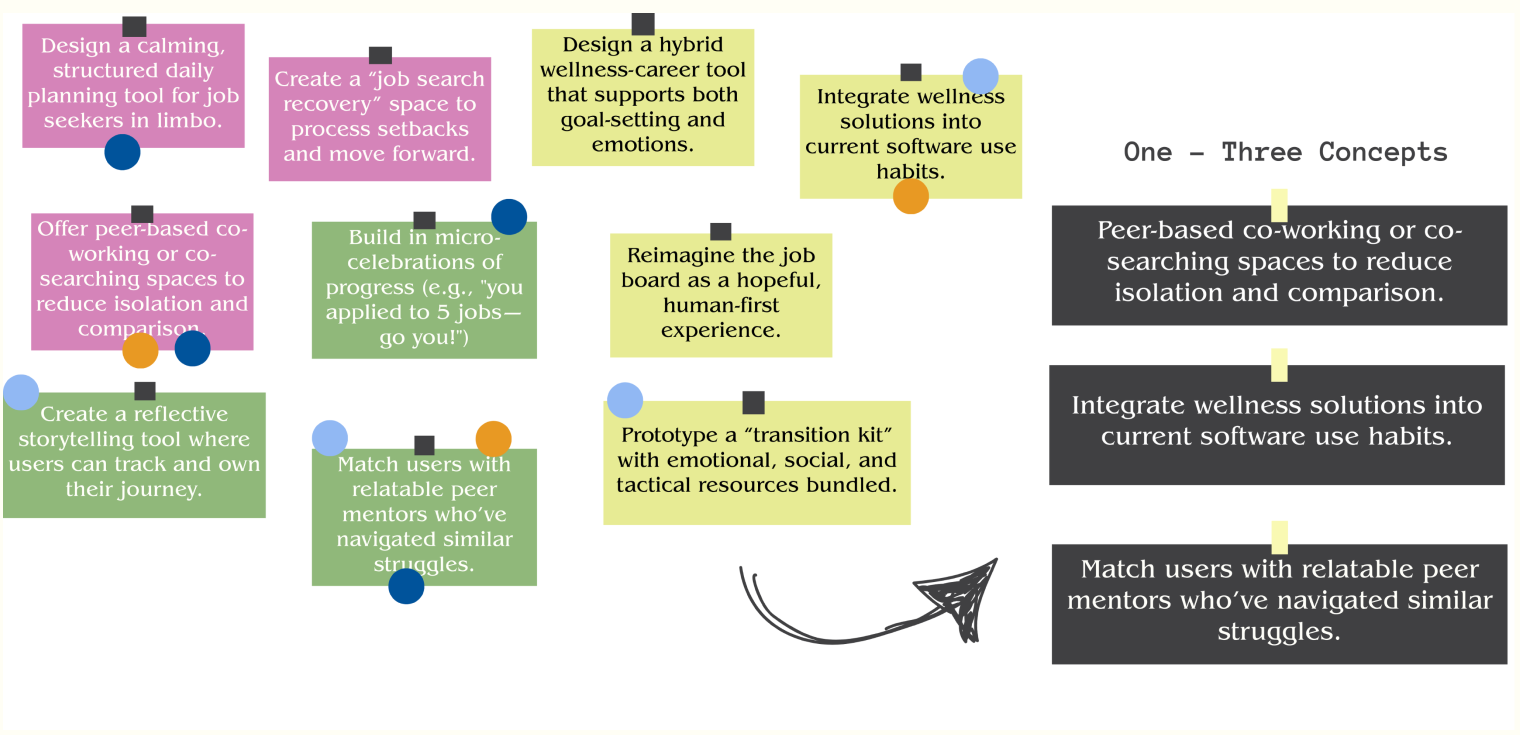
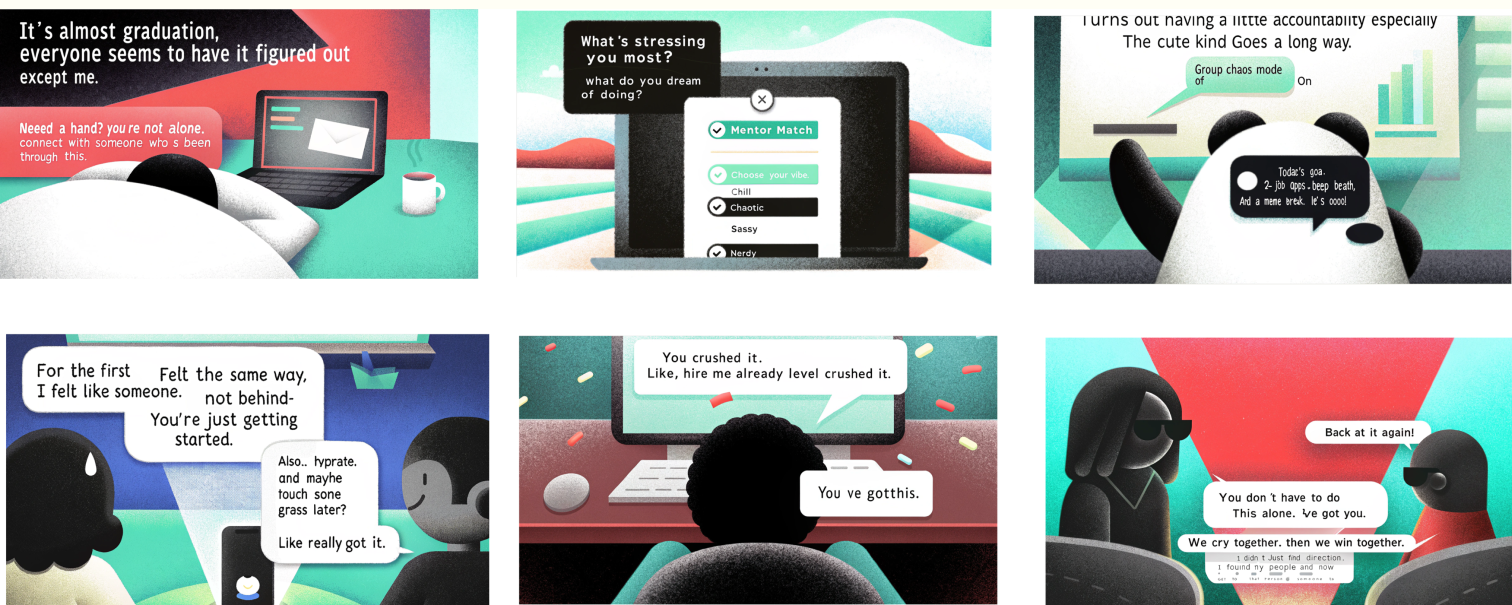
Due to the limited timeline of the project, we chose to focus on small wins based on:
Touchpoint → a visual dashboard of small wins
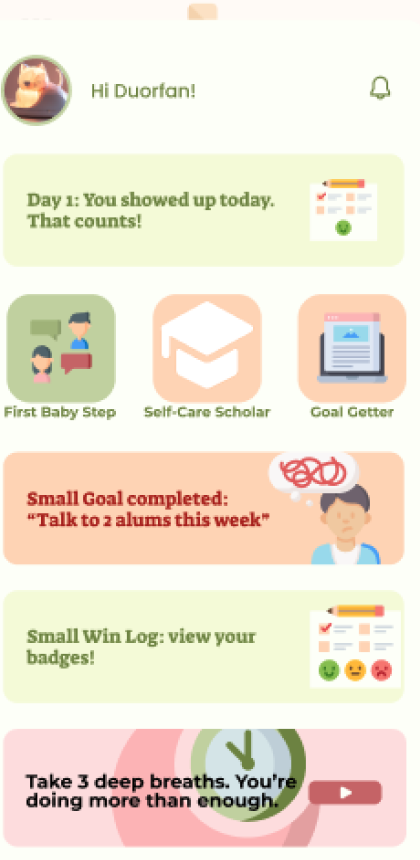
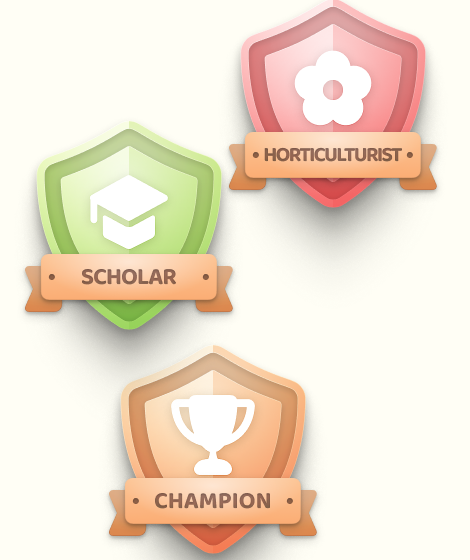
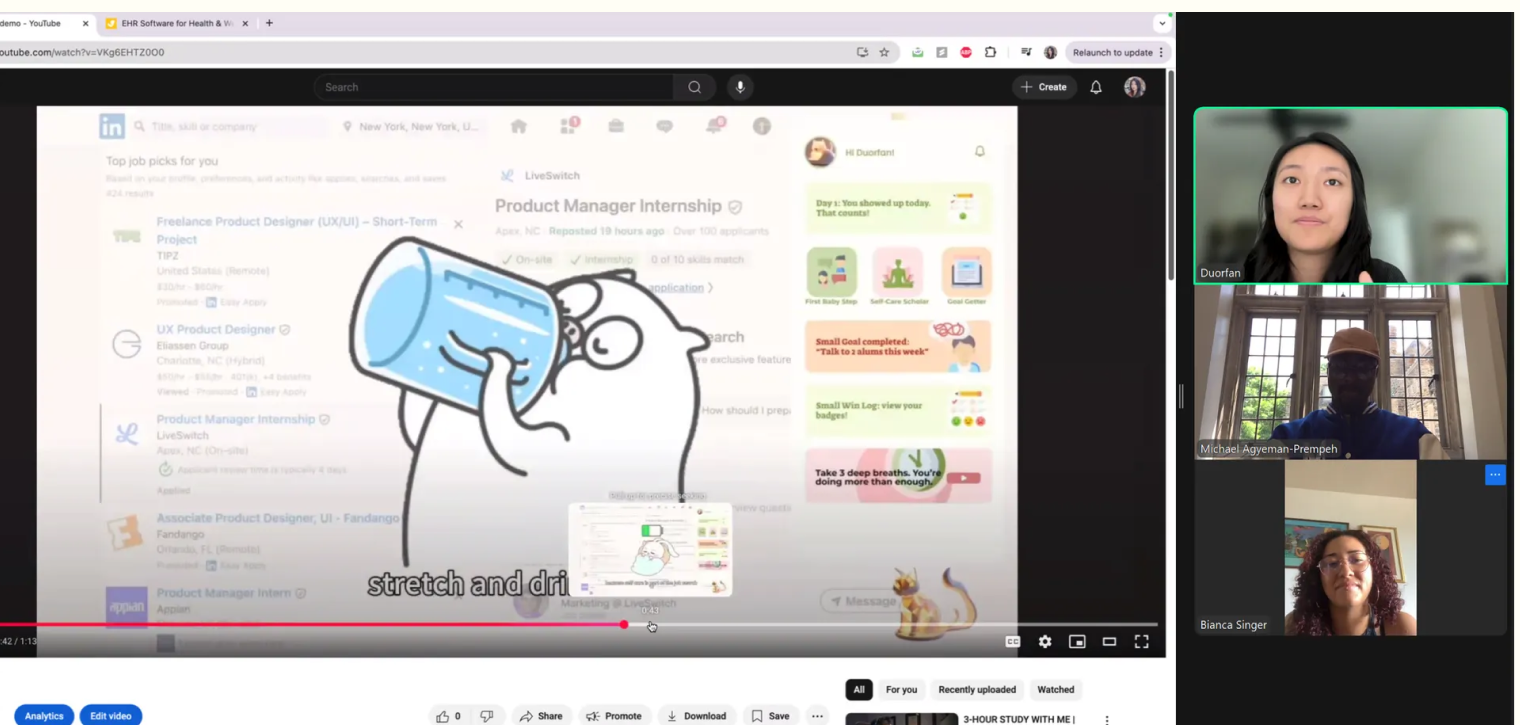
We agreed on a visual dashboard users engage with while job-surfing — but we didn't want it to be distracting. So we planned a Chrome plugin that rewards users with positive affirmations and small win badges. I created the workflow and UX content based on our revised HMW, and dived into what the small wins are and what our users — young adults overwhelmed by early career transition — need reminding of most to prevent them from crashing. For nudge names and tone, I took inspiration from apps that have done amazing things in encouraging habit-building, such as Duolingo and Headspace.
We developed 2 hypotheses to test the mockup's affirmation prompts through moderated remote interviews with 2 health experts and 2 graduate students, plus unmoderated testing. H1: affirmations like virtual badges and small-win reminders benefit career transitions not just career-wise but health-wise. H2: if users can track and visualize small personal wins, they'll feel more motivated and less overwhelmed during their transition.
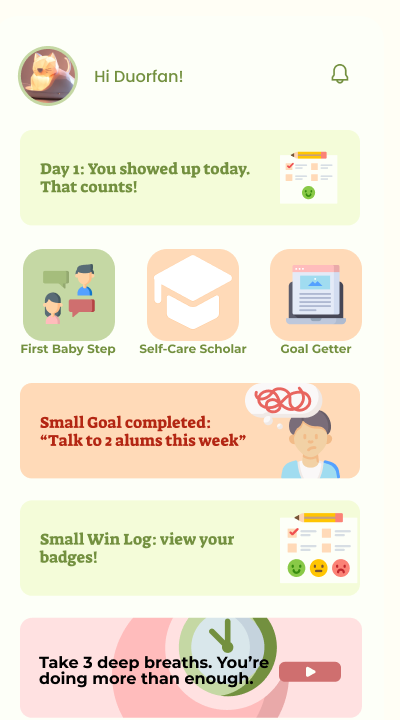
We sent out a survey with semi-qualitative questions to understand how users interact with our mockup and what parts of the dashboard feel desirable.
very likely to use a plugin like this during stressful periods
found custom goal setting most useful and motivating
liked the affirmative tone and health-conscious nudges
Through a UX mockup, we validated that users found the gentle tone + visual metaphors (gardens, mood colors) highly effective — and many wanted the tool to "understand" their behaviours and proactively suggest next steps and goals that would best suit them.
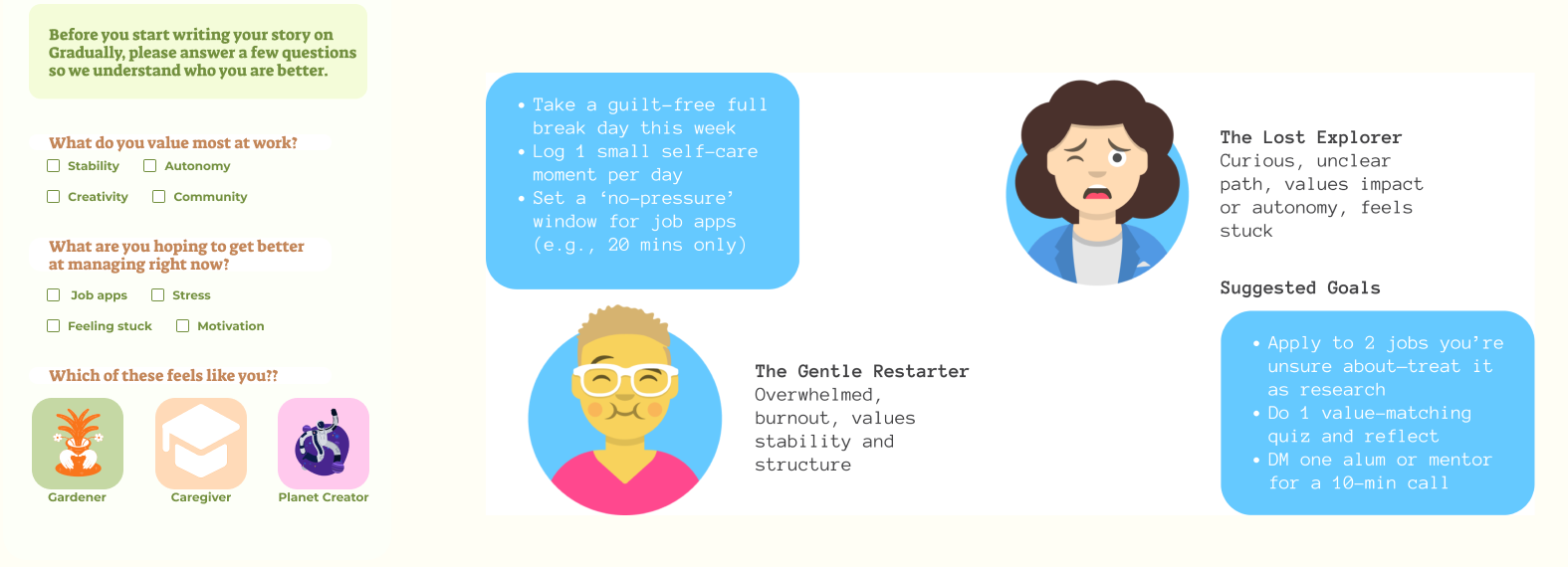
Small wins are different for everyone, even at similar stages in life — so it's important to give users autonomy to customize their experience. This led to the Value-Aligned Archetype System, an onboarding process that helps a lightweight ML component make the plugin more responsive to a user's habits over time:
This project reinforced the importance of emotional UX design. Individually, I grew in:
Next, I hope to refine this into a working MVP, integrating ML and testing how different user archetypes affect engagement, retention, and perceived emotional support.
Thanks for reading :)